Worldschooling in a teardrop
Family travel is one of the fastest-growing segments of the travel industry. Combine that with your family education by learning through long-term travel and worldschooling.
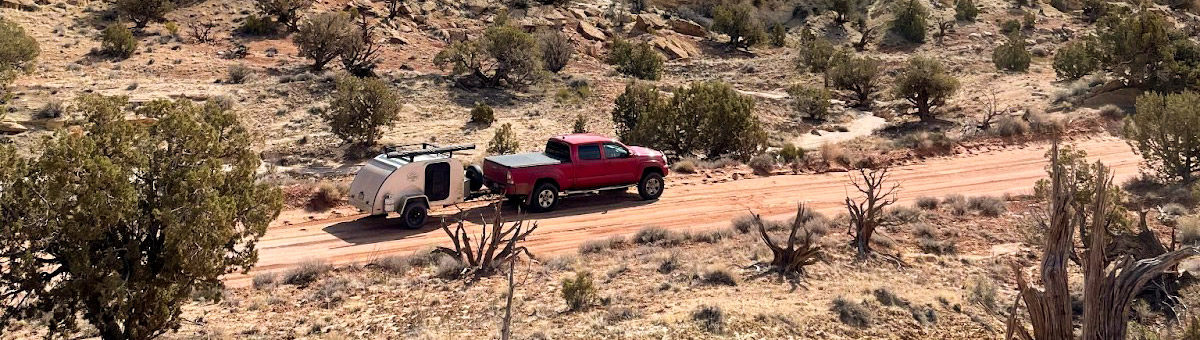
A few short weeks ago I told my friend Steve that I was going to take a western states roadtrip for some R&R after a long winter sports season at my gym in Pennsylvania. Being a good friend, Steve offered up his Colorado Teardrop Canyonland for the occasion.
This isn’t the first time that I’ve used Steve’s Canyonland. Previously I took the camper on a trip through the Northern Rockies where my primary destination was the mountains around Central Idaho.
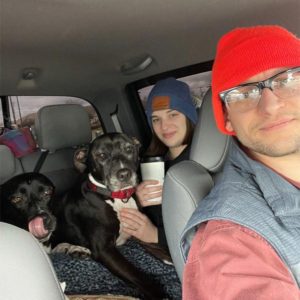
This time, however, my plans (and the late march weather) took me a little further South. Along with my wife and our dogs, we were going to spend 3 days in Escalante, UT, followed by 4 days in California’s Central Coast–specifically the San Luis Obispo area.
We left our house in Pennsylvania on a Friday night after work.
Many are surprised when I tell them that I don’t see a lick of interstate from Western Illinois until in Colorado. This is the glory of Route 36.
I initially found 36 when a friend made a wrong turn on one of our road trips and ended up on I-29 South instead of I-80 West out of Omaha.
I was pleasantly surprised with the driving conditions on US Route 36. Very relaxed. Very little traffic. You may lose 10-15 MPH versus an interstate, but this route makes the drive into more of a journey. You’ll also get a bump in fuel efficiency from the drop in speed.
Kansas can get monotonous and be a coffee dead-zone. But if you have the time for Route 36, you have time to brew up a french press in the back of your teardrop. It tastes best if brewed in some small-town public park. Then, with caffeine in your blood, you can really crank the Waylon Jennings (specifically ‘Where Corn Don’t Grow’) and see a different side of American life. I’m acclimated to rural living in Appalachian Pennsylvania, but damn, Route 36 is really rural.
Speaking of rural, gas up on Route 36 wherever the opportunities present themselves. The downside is as you move further and further west, the gas stations get fewer and further between. The upside is that this is a sign that the population is thinning out and you’ll be privy to wide-open spaces.
We left on a Friday and Route 36 brought us to Boulder, Colorado by Sunday afternoon. And that’s with about half of our total travel to that point being off the busy interstate. And the start of our western states roadtrip.
Our initial plan for that Monday was to poke around Nederland, CO on our way west, but with snow in the forecast we headed down to I-70 for a safer passage up and into the rockies.
With the teardrop in conjunction with the abundant public land of the west, we were able to camp on a whim during our travel days with very little set-up or tear-down required.
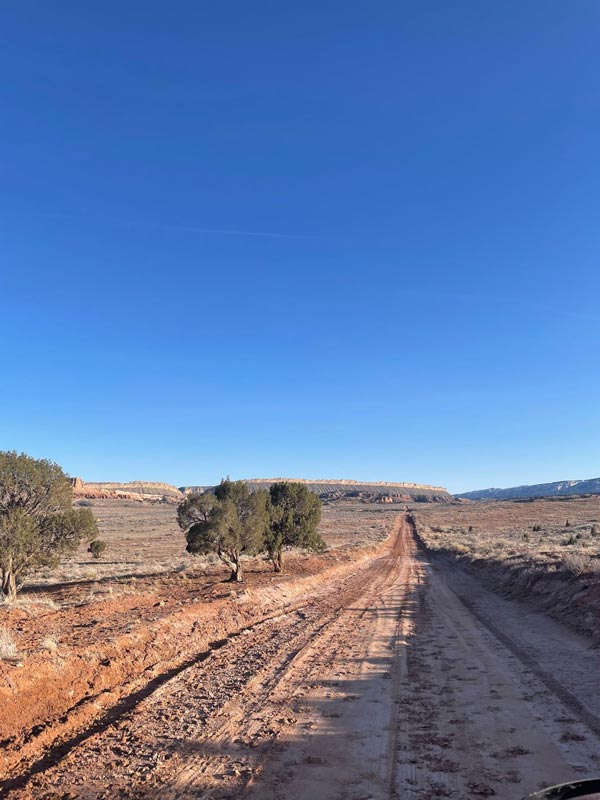 Traveling to our next destination of Hanksville, UT was undoubtedly long. But as an east-coaster, it’s easy to get immersed in the massive landscapes of the west, making the drive much more palatable (and I’d go as far as to say that it’s a downright fun drive).
Hanksville–and the broader Escalante region–initially came onto my radar in 2019 when I bicycled across the United States, my route, the Western Express, goes right through here and crosses the Colorado River and Lake Powell in Hite, UT. I’d say that the desert and its challenging landscape almost killed me that year which, in part, is what brought me back.
I’m not one for giving out specifics along a route. This country is filled with places worth exploring. And naming just a few of them can place a burden on that particular environment. But if you’re planning a western states roadtrip, the Burr Trail is a very cool ‘overlanding’ route that you can take through Capitol Reef National Park.
We took this route in lieu of Utah’s Route 24, it was partially paved which was actually a surprise. This is a very cool route, but be warned. It may be impassable to some low-clearance vehicles, perhaps impassible even to 4×4’s in inclement weather; check road conditions.
We made it across the Burr Trail and then to our first destination–Escalante, UT. Escalante is a very cool town in an adventure-rich environment. If you have the time in the spring or fall, spend a few weeks here–you won’t regret it.
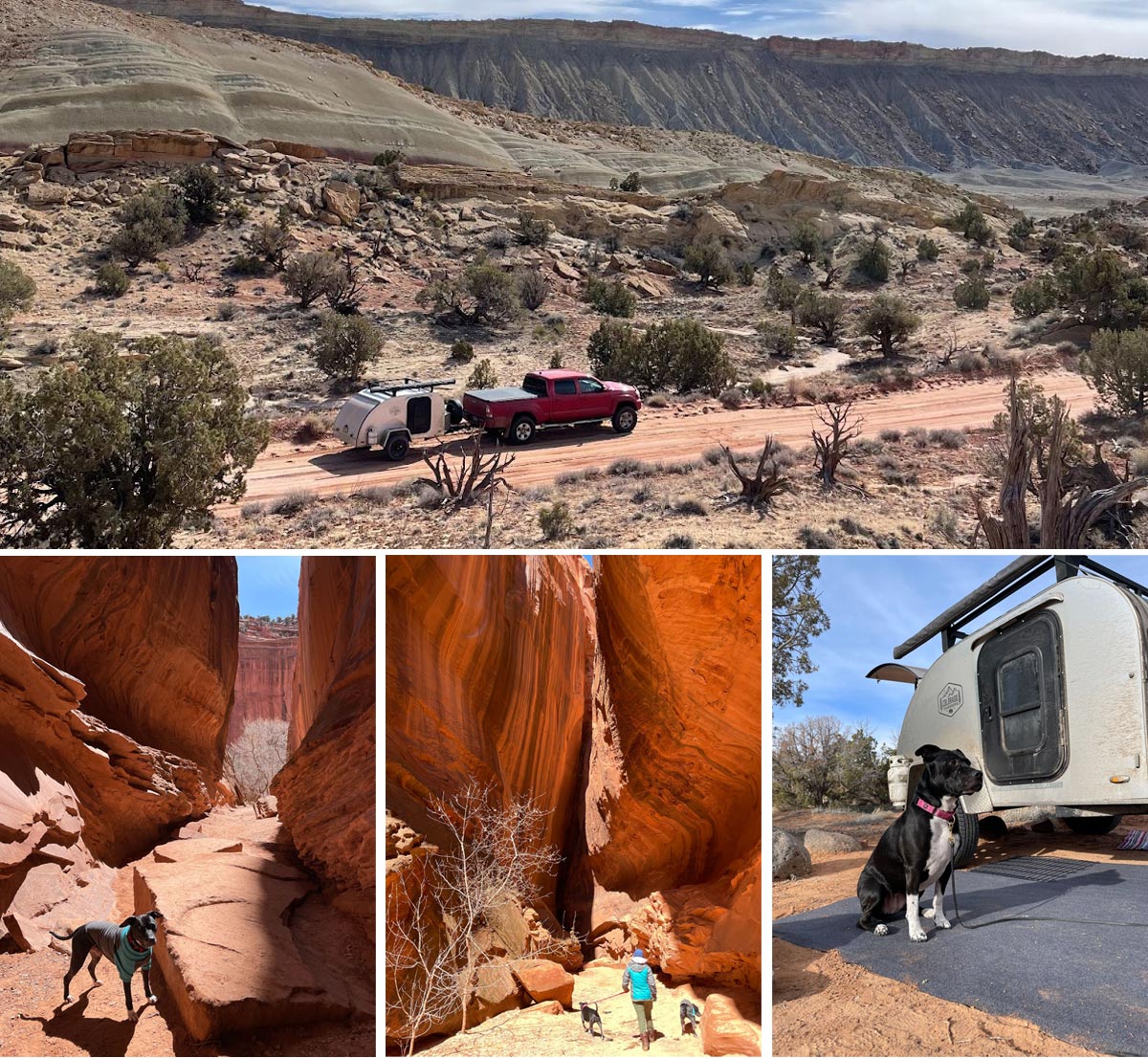
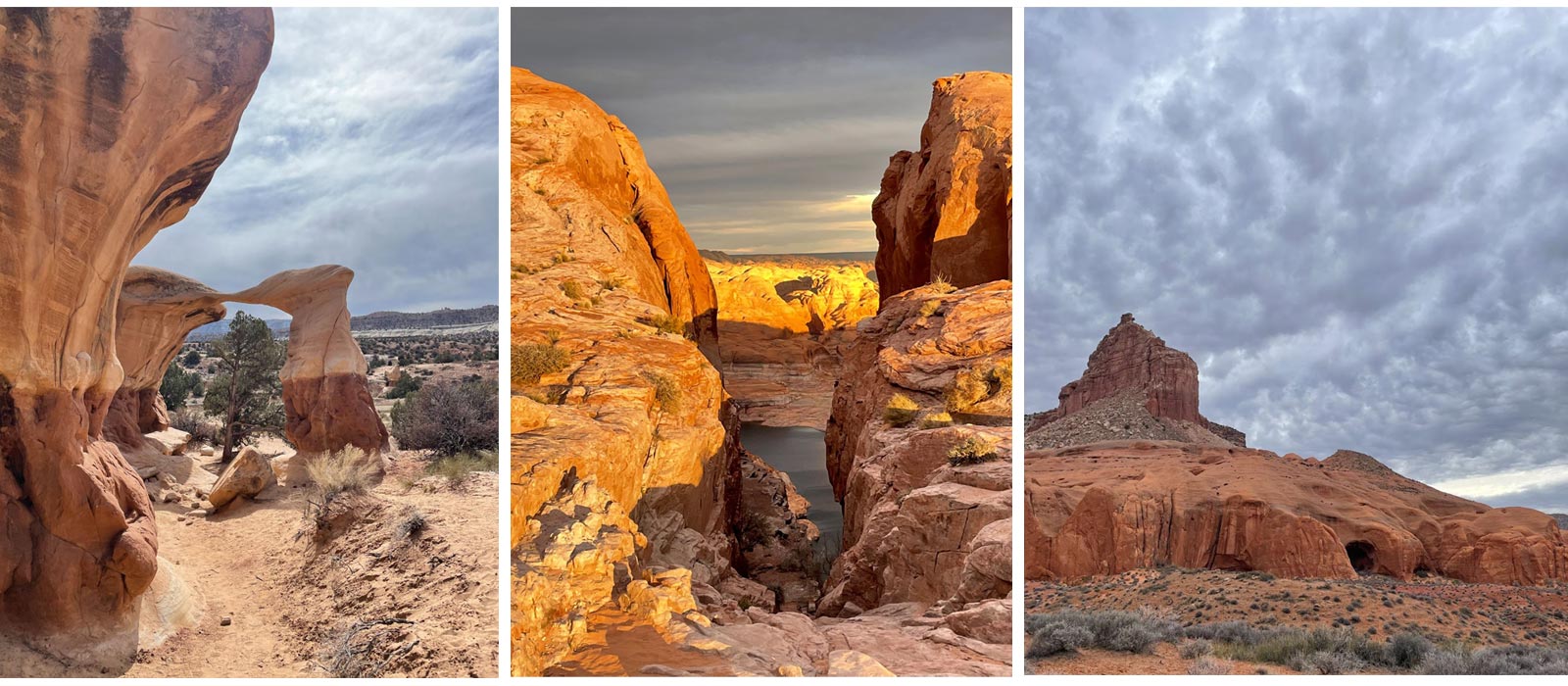
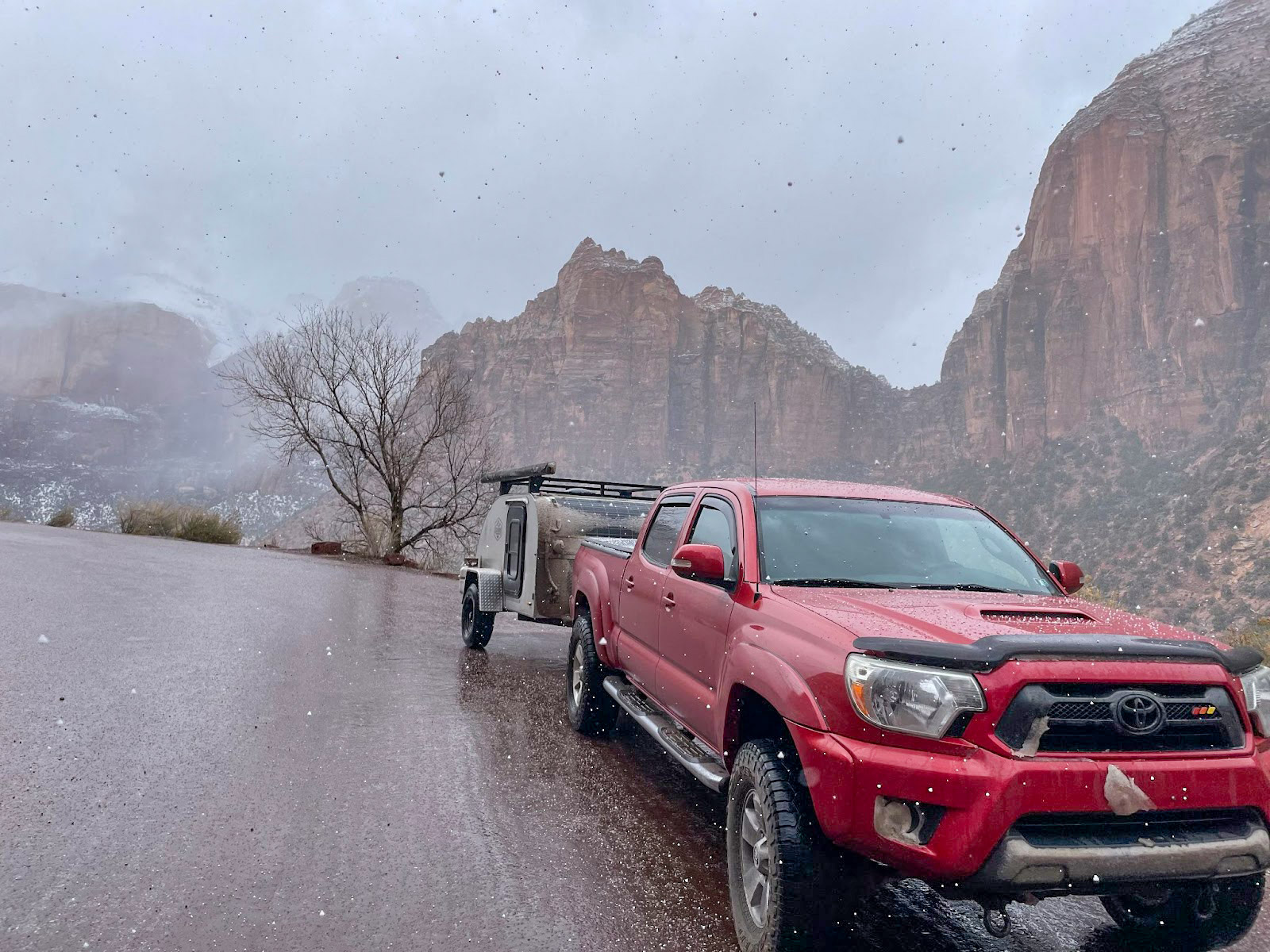 A grand total of 16 days on the road might seem like a lot, but when you’re in an immersive environment that time will fly by – and on this western states roadtrip, it did.
Escalante is very close to a few different national parks. We ended up traveling through Capitol Reef, Bryce Canyon, and Zion. Canyonlands is close as well but didn’t make an appearance on this trip.
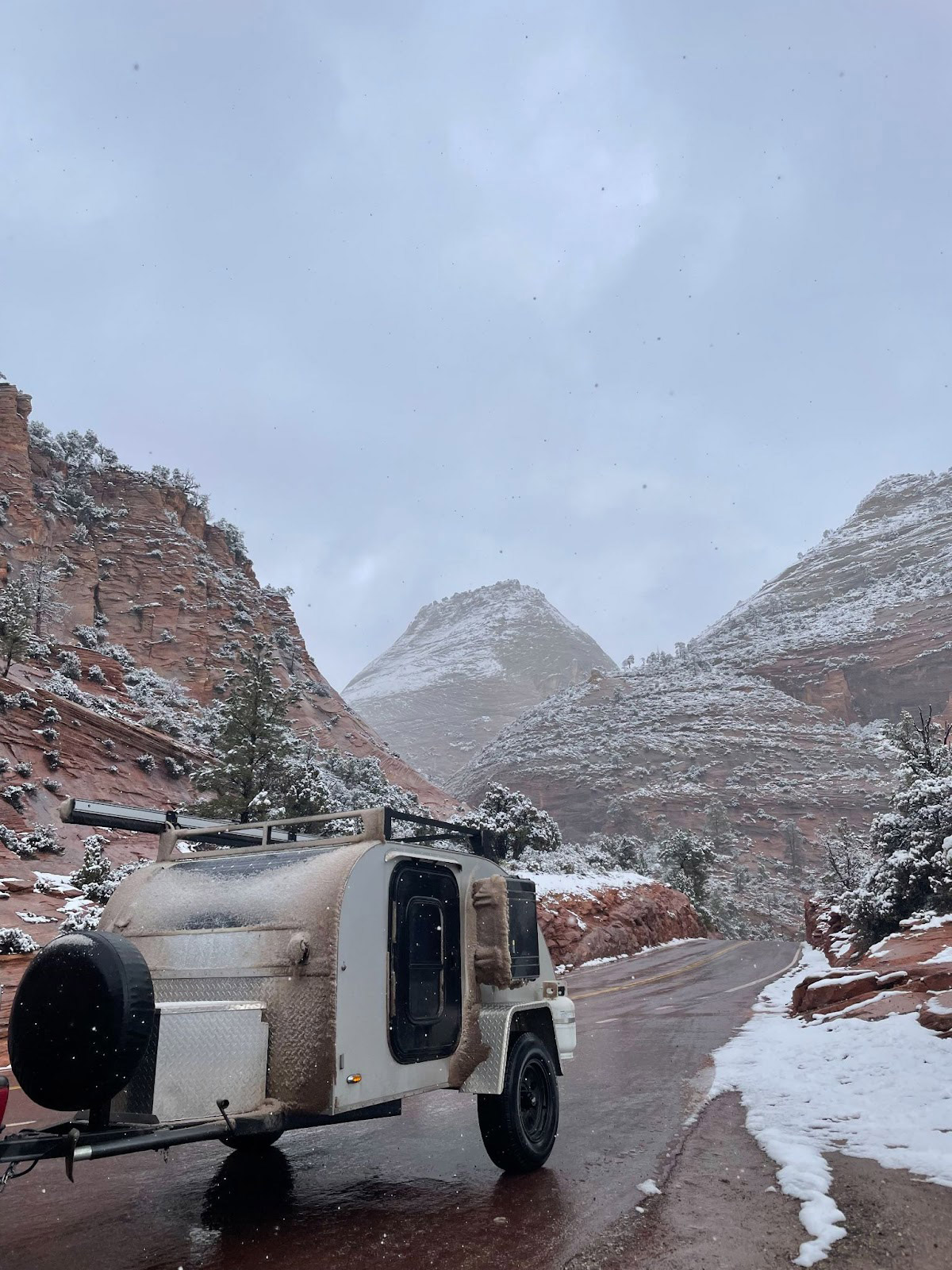 Coincidentally, or perhaps not so coincidentally, our route through Zion National Park had put us in the midst of the greatest concentration of people that we saw up until this point on this trip. Since some parts of the park were still snowed in, the main East-West roadway, Route 9, was filled with a full park’s worth of people.
From here we headed west towards our next destination of San Luis Obispo, CA.
The following day we made it to our first stop in California. We were about a week early for the Carrizo Plain National Monument ‘Superbloom’. This is actually where our road conditions were the worst of the trip. The dried-up lake bed that makes up the valley here was totally saturated. The heavy rains, which helped to bring California out of its drought also made the normal dirt into a thick impassible clay.
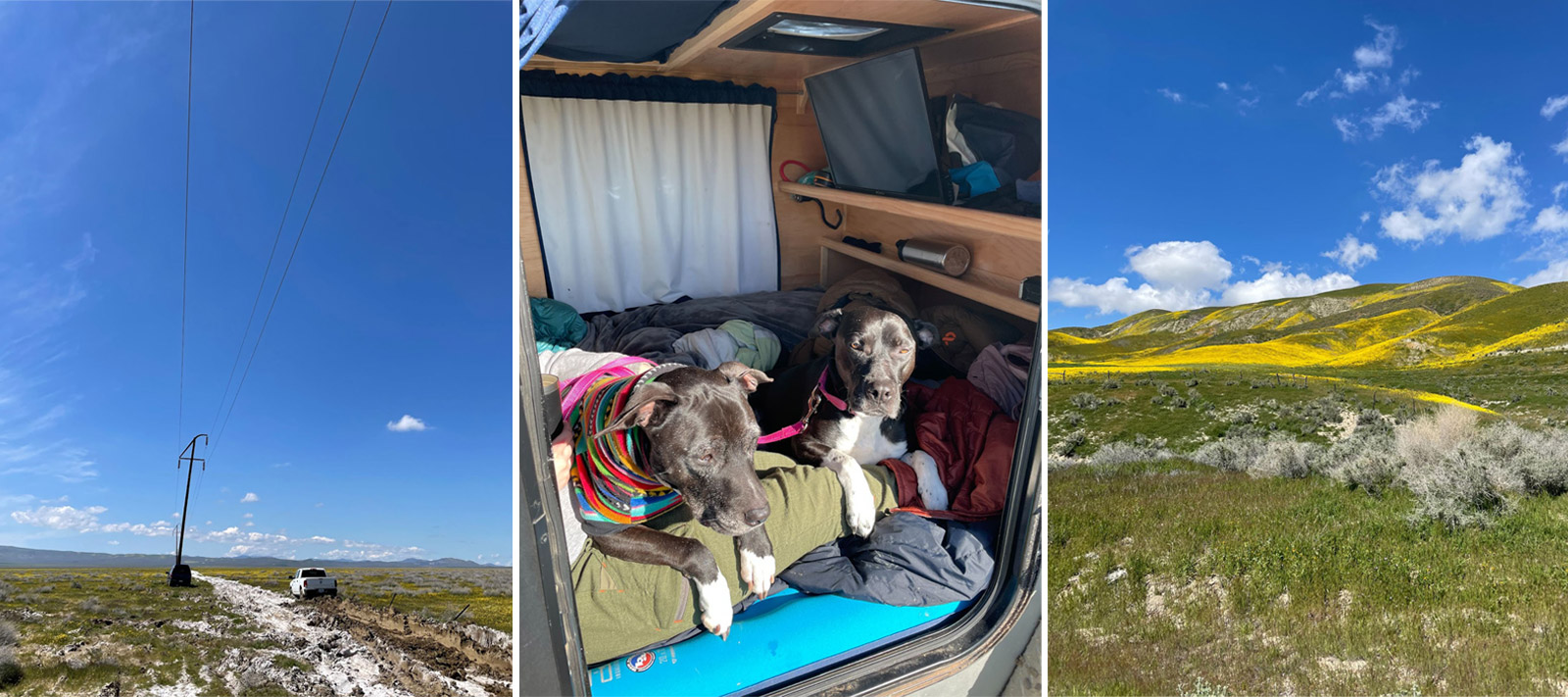
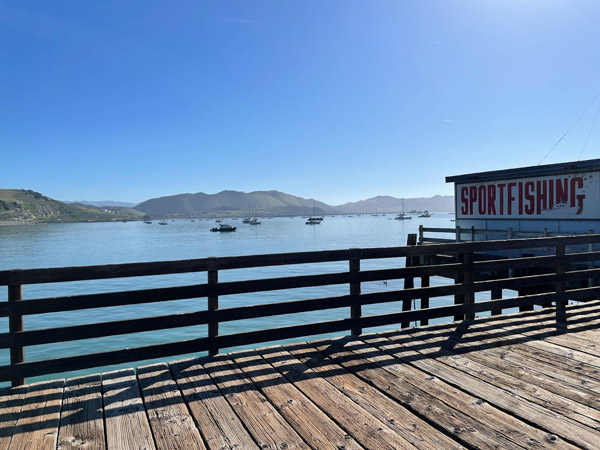 As does any good westward journey, ours ended at the pacific ocean. Specifically we made it to a handful of beaches near Pismo Beach, including: Avila, Pismo, and Morro Bay. The wife and I were married in Harmony, CA so the central coast holds a special place for us.
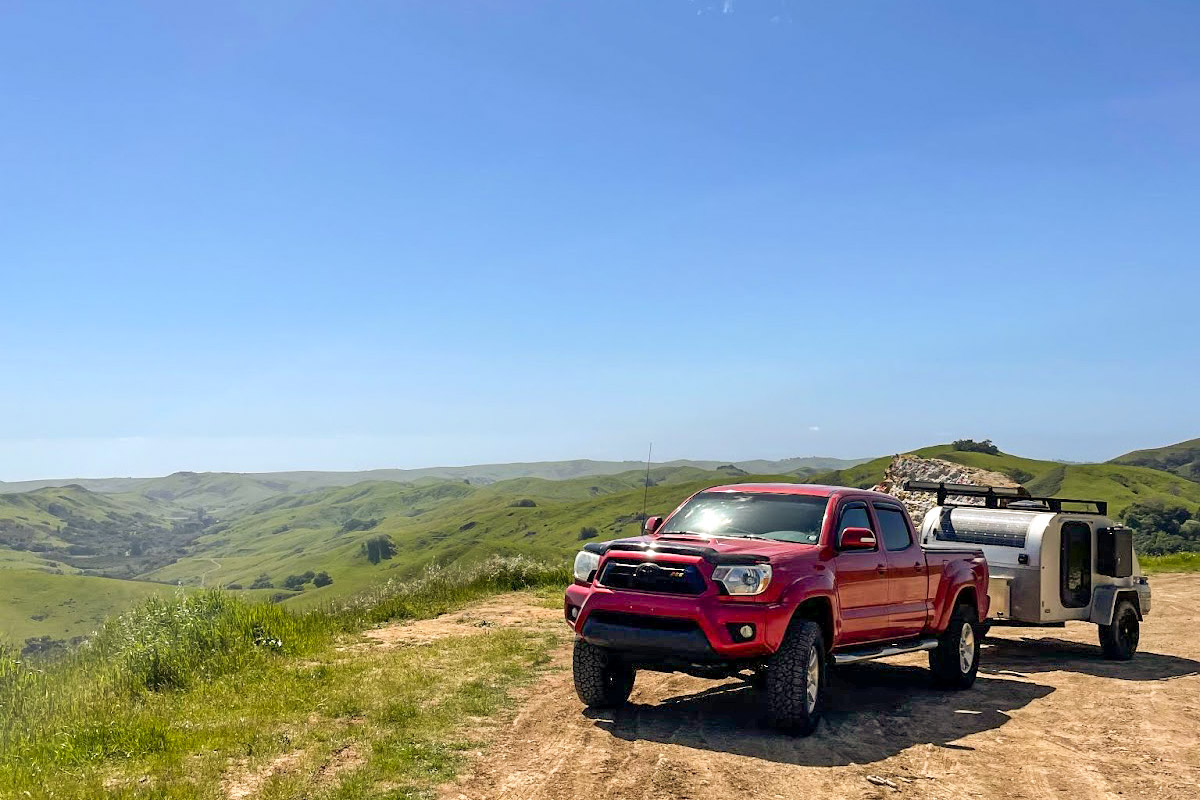 After a long weekend in the sun (and the warmest weather on the trip), we had to start our return journey back east. I-40 would’ve been a very viable option for this time of year. Flagstaff, AZ is always a great stop–as is Albuquerque (for the Breaking Bad filming locations, if nothing else).
But we decided to head north. The plan was to spend a night in the foothills of the Sierras (specifically Sutter Creek, CA), then, up and over by way of Tahoe. We actually made a mini-road trip and looped up and around the lake.
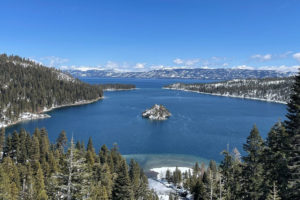
Then onto Route 50, commonly referred to as ‘the loneliest road in America’…
Well, it ain’t the loneliest, that’s a designation that I’ll hold privately for fear of blowing up yet another spot. BUT Route 50 is a fantastic way to see Nevada. On a western states roadtrip, Route 50 definitely requires some self-reliance but the views, solitude, diversity of ecosystems, and abundance of ghost towns make it worth it.
Once you make it to eastern Nevada, you’ll be within miles of Great Basin National Park. Most of the park was closed to vehicular traffic due to snow, but we took a trip through town and through as much of the park as we could.
Route 50 East was our home until we ended up on I-70. We ran I-70 through Utah and then diverged from the highway at Grand Junction, UT. We started on Route 50 through Colorado. I’ll be the first to say that this was an indulgence. If you’ve got an east coast brain, you don’t even need to work around I-70 in Colorado to see some great country. I-70 will take you up and over near some of the premier ski resorts and mountain towns. Route 50, however, cuts back the pace and takes you through beautiful country just a bit further to the south.
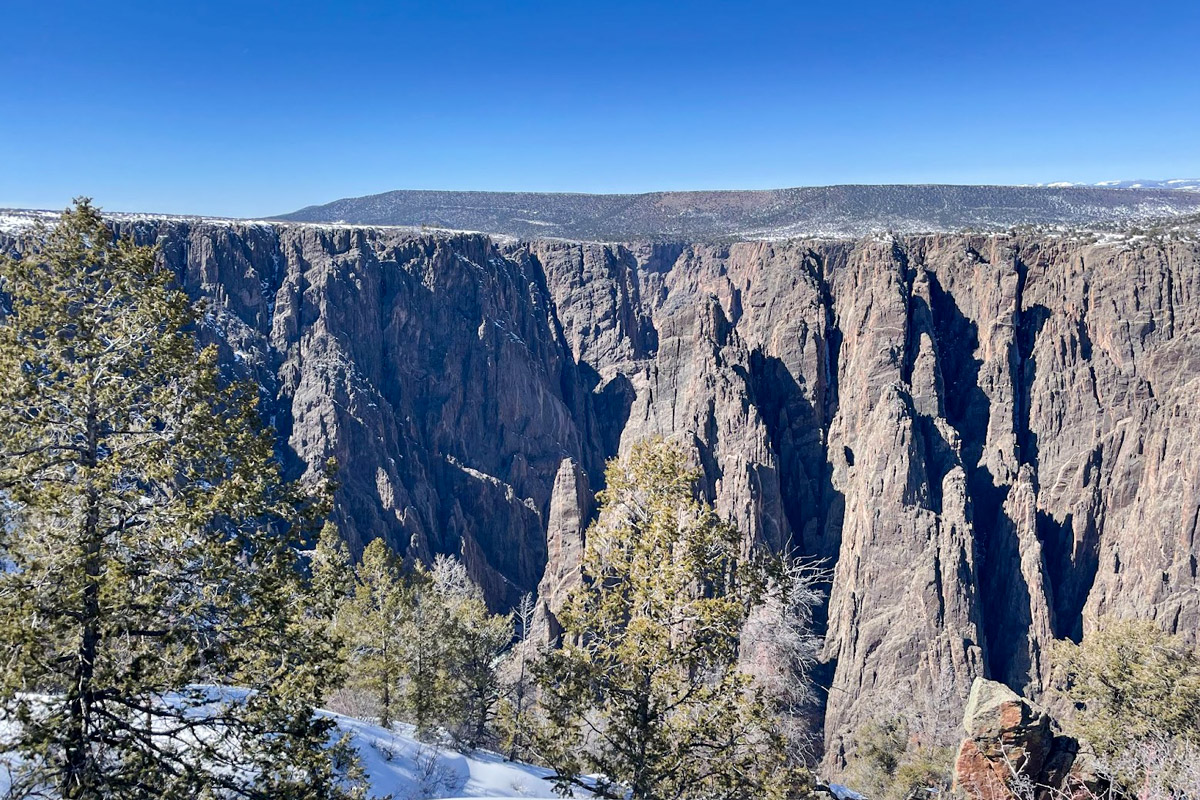 Route 50 will also get you to Black Canyon of the Gunnison, or what a local shop owner called ‘the most underrated national park’. Well, that statement isn’t a hill that I’m willing to die on but it is beautiful country. It is also home to park rangers that are genuinely happy to see you, as opposed to some of the larger parks where the rangers are 90% babysitters (**cough Yellowstone**, **more coughs… Yosemite**…)
Gunnison was our last stop which felt like a true western mountain town. We crossed the continental divide at Monarch Pass and were quickly back in the flatlands of the midwest.
But just as we had done on our way west, we made every attempt to avoid the highway. During our eastbound trip, we avoided the major interstate travel almost completely in Nevada, Colorado, Kansas, and Missouri.
The Colorado Teardrop helped us improve our self-reliance and enhanced our ability to take the road less traveled. The bed made for a genuinely comfortable sleeping experience, the kitchen might have even saved us a couple of bucks by letting us cook for ourselves, more importantly it gave us a home base when we were more than 2,800 miles from home.
In total, over those 16 days, we traveled about 6,500 miles, covered some familiar territory, and added some new hidden gems to our repertoire. We’ve been home for less than a week and I’m already planning the next one.
Family travel is one of the fastest-growing segments of the travel industry. Combine that with your family education by learning through long-term travel and worldschooling.

Great camping recipes have the power to transform a simple outdoor experience into a culinary adventure and elevate your camping experience.

Camping in cold weather is an opportunity to experience the quiet beauty of nature. A teardrop trailer is a perfect sanctuary amidst winter’s raw beauty.

